About Us

Our Mission
VAGBSA continues the work of the Buffalo Soldiers who tirelessly fought for the American ideals of freedom, honor and equality. Today, we accomplish this by raising awareness about the obstacles veterans face as they re-enter society, serving as a memorial for the veterans we have lost and filling the gap in government veteran assistance programs.
VAGBSA partners with veterans and their families to ensure their reintegration into society is successful. We also work with veterans from any era to secure affordable housing and gainful employment.
Tribute to Rodeo Rich Washington
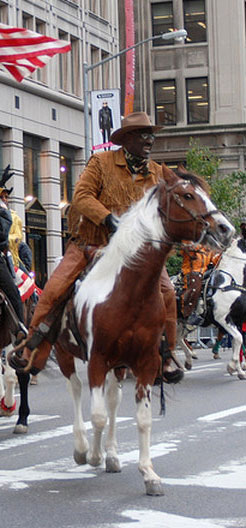
The name Rodeo Rich may conjure up images of the wild west, cowboys, large ranches, the great outdoors of Oklahoma or Montana, or riding the trails. Rodeo Rich Washington is not from out west he is a New York bred, Brooklyn: Bedford Stuyvesant born and raised Cowboy. Our homebred cowboy grew up idolizing Gene Autry, Roy Rogers and the Lone Ranger- even the Duke’s(John Wayne) cowboy movies were among Rich’s favorite growing up. Rich decided early in life that he wanted to be a cowboy, so he asked his parents for a horse. His parents could not afford to keep a horse in Bed Stuy so they compromised and allowed him to take horse riding lessons instead . He started riding the trails at Brooklyn’s Prospect Park and a legend was born. This love for horses was the start of a genuine passion that has not waned and is Rodeo Rich's main passion to this day.
Continuously riding from the age of 12, Richard graduated from Haaren HS (now the campus of John Jay College) and started working as an electrician’s apprentice. This was also the career path he followed after his tour of duty was over. He was drafted during the Vietnam Conflict era and stationed in The Korean DMZ .His enlistment tour was spent in the Korean city of Pusan where to his delight he discovered, that all service personnel took regularly scheduled Rest and Recreation breaks from the conflict, at the Walker Hill military resort. Among the scheduled activities for relief was his true love horseback riding. This riding served another purpose as he discovered it’s therapeutic benefits. Rich completed his tour and he came back home determined to spread the many beneficial[i] aspects of therapeutic horseback riding, in his beloved NYC. This was the birth of Cowboy Mania.
The Cowboy Mania organization was an extension of the philanthropic and humanitarian side of Rodeo Rich. Rodeo Rich started taking some of his neighborhood kids to the stables that he grew up riding in. Horseback riding is expensive so Rich had to fund some of the excursions to Bergen Beach and Prospect Park riding clubs with his own resources. He then engaged the elected official’s organizations and city agencies to help make this beneficial activity a reality for the truly disadvantaged residents of the inner city. The groups got larger as the Cowboy Mania movement reached iconic status. Trips to upstate NY and Connecticut where Cowboy Mania activities were held were hugely popular standing room only affairs. Rodeos and Showdeos were held in Westchester County, Queens, The Bronx, New Jersey, and even as far away as Delaware, Washington DC, North Carolina and Oklahoma. The organization became synonymous with NYC style equine therapeutic events.
He has received many accolades and citations, from elected official’s organizations large and small, and other prominent members of the community who have recognized and applauded his humanitarian efforts. Yet Rodeo Rich remains a humble NYC cowboy determined to bring his love of horsemanship to all. Rich said that despite the accolades, the best feeling he ever had was when he helped a physically challenged young man named Charlie to get his first horse ride. The unmitigated joy and happiness that was expressed on Charlie's face counts as one of the highest points in his life. That feeling ranks higher in his memory than when he was awarded Cowboy Man of the Year by the American Federation of Black Cowboys. Rodeo rich has also been recognized as a legend by the Legends of NY organization.
Bill Pickett, The Duke (John Wayne), Roy Rogers, and the Lone Ranger would be proud of the accomplishments of Rodeo Rich, a true NYC COWBOY. Riding through the streets of his beloved New York City, and bringing the joys of cowboy style therapeutic horsemanship to all. Rodeo Rich, humanitarian, veteran and, iconic New York City cowboy.
Tribute to Herbert Shannon Jackson Sweat
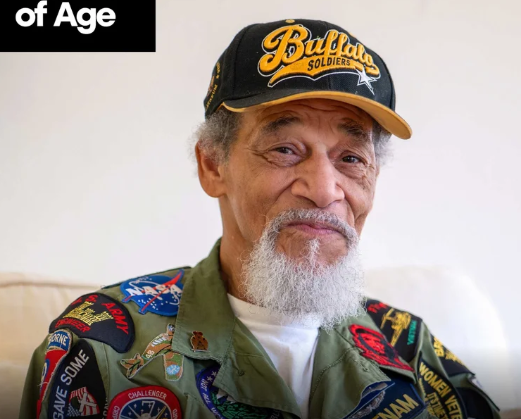
Herbert Jackson Sweat, known to many as just "Sweat" or "Brother Sweat" was born March 3rd, 1949, in Brooklyn, NY to the late Milton Bernard Bess and Mary Sweat Bess. He grew up in the heart of Bedford Stuyvesant, a neighborhood that would shape his fierce pride in Brooklyn and lifelong commitment to community. Summers spent on the Shinnecock Reservation with his grandparents, Adaline Bell and Robert Bess, connected him deeply to his Native heritage, which he learned from his mother, who was Eastern Cherokee, Blackfoot, and Creek These roots gave him a spirit both resilient and proud, a man unafraid to honor where he came from.
At just 17, Brother Sweat enlisted in the U.S. Army, serving as a paratrooper from April 1966 until October 1970. He served with both the 173rd and 101st Airborne Divisions in Vietnam and took part in the Tet Counteroffensive of 1968. one of the war's largest operations. A decorated soldier, he came home with medals and memories, some too heavy to speak aloud. Like so many of his brothers, Brother Sweat carried the weight of combat with him for the rest of his life- but instead of letting it break him, he transformed his pain into purpose.
After returning home, Brother Sweat was never one to sit still He drove a tractor trailer for The Daily News, then broke barriers as one of the few Black apprentices in the Local 14-14B Union, mastering the art of heavy machinery- backhoes, cranes, and anything else that could move the earth. He also rose through the ranks of the Masons, eventually becoming a 33rd degree Mason, a title that reflected not just honor, but discipline and perseverance
But Brother Sweat's greatest work was not in machines or medals. It was in people. Out of his own struggles with PTSD, he helped create Black Veterans for Social Justice, Inc., in Brooklyn, and faithfully served as its Chairperson for decades. He became a lifeline for countless veterans- helping them secure housing education, employment, healthcare, and, perhaps most importantly, hope. Every Wednesday for 25 years, he drove from Long Island to Manhattan to mentor in Veterans Treatment Court offering second chances to men and women who desperately needed them. His work was recognized in the New York Times, in a Smithsonian collaboration and in Philip F. Napoli's book Bringing It All Back Home, just to name a few. However for Brother Sweat, the truest reward Was seeing someone stand a little taller because he had their back
You couldn't miss Brother Sweat in a crowd: Derby hat tilted just so, suspenders snug and a bowtie announcing both style and stubborn pride, He had a knack for delivering life lessons in riddles, part philosopher, part trickster, always keeping his children, grandchildren, and friends on their toes. He could be opinionated and stubborn, yes, but also wise, generous, and deeply loving. Above all, he was a provider- making sure his Family was cared for, even if it meant putting his own needs second.
We will remember Brother Sweat as a man of character, courage, and humor. A man who loved his community as fiercely as he loved his family. A man who, despite
battles within and without, danced through life in a bowtie and Derby hat. His legacy will live on not only in his family, but in the countless lives he touched through his service, mentorship, and love.
Rest easy, soldier, veteran, father, brother, uncle, friend. You have earned your
peace.